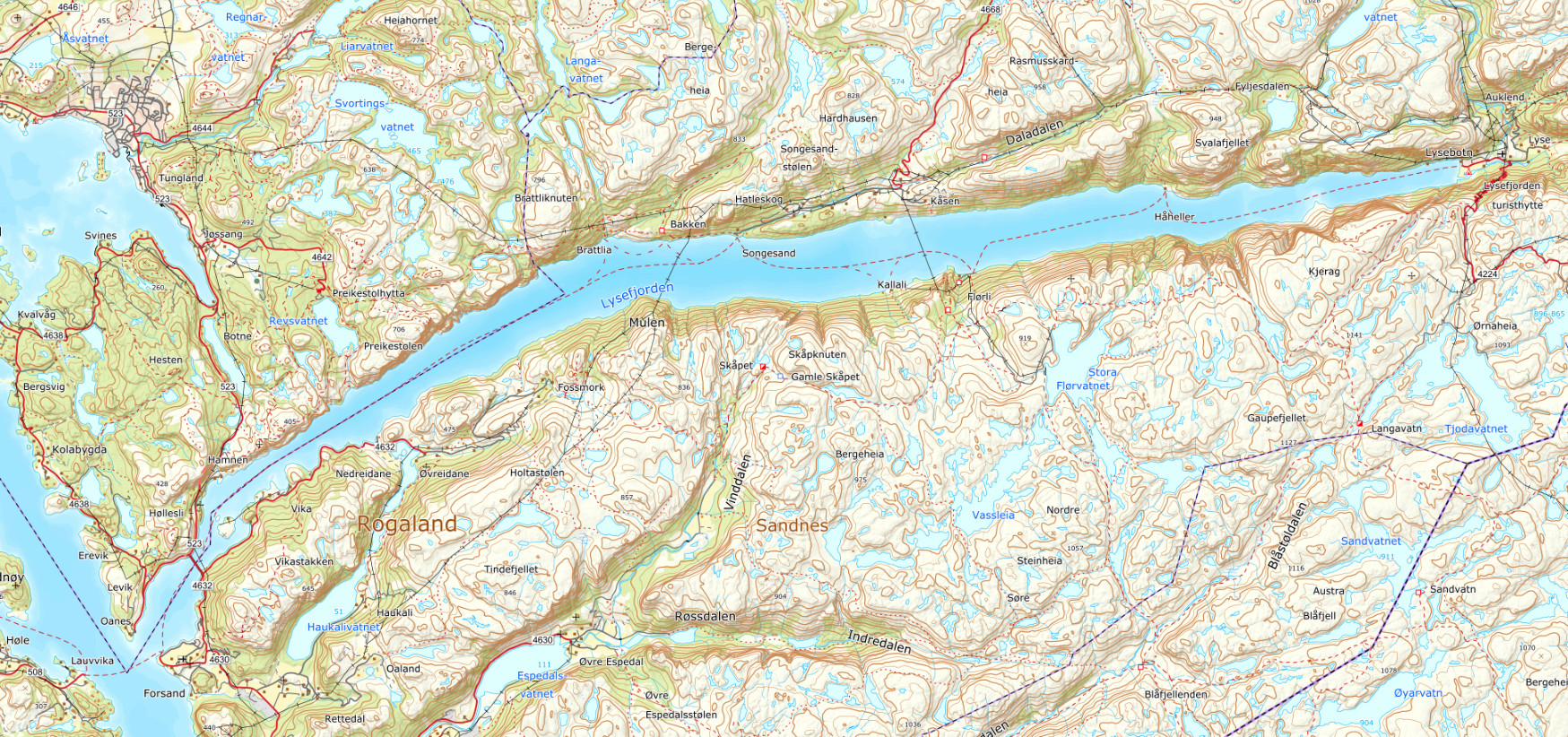
Preikestolen
Après sa découverte en 1896, Preikestolen, formation rocheuse, est rapidement devenue l'une des destinations touristiques les plus prisées de Norvège, offrant une vue imprenable sur le Lysefjord. Si de nombreux visiteurs viennent admirer le paysage, peu connaissent l'histoire géologique et touristique de Preikestolen.
Preikestolen, destination de randonnée prisée en Norvège, attire plus de 350 000 visiteurs par an grâce à son sentier de quatre kilomètres bien entretenu et à ses vues imprenables sur le Lysefjord. En 2015, Lonely Planet a classé Preikestolen en tête de sa liste des plus beaux points de vue au monde.
Mais si de nombreux visiteurs viennent admirer la beauté de Preikestolen, peu connaissent l'histoire géologique fascinante qui explique sa formation. Il y a plus de 10 000 ans, à la fin de la dernière période glaciaire, la fonte des glaciers a inondé la vallée, créant le Lysefjord. Les montagnes du fjord, privées du soutien de la glace, sont devenues instables, et les trois flancs de Preikestolen se sont fendus en trois grandes fissures, provoquées par des avalanches rocheuses.


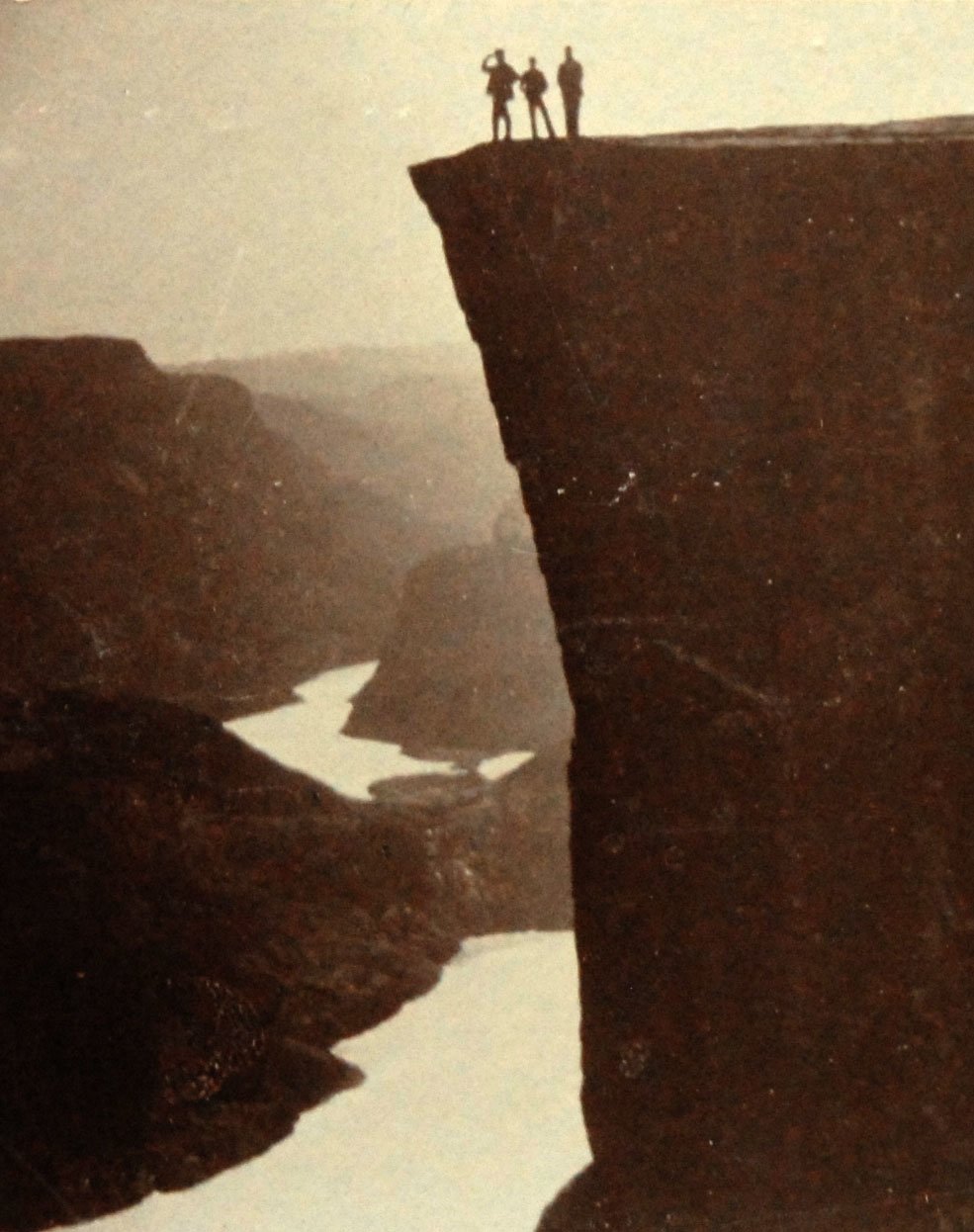
La découverte de Preikestolen eut lieu en 1896 lorsque Thomas Peter Randulff remarqua cette formation rocheuse remarquable lors d'une croisière sur le Lysefjord à bord du bateau à vapeur Oscar II. Le capitaine Hana expliqua que la falaise ressemblait à la lame d'une raboteuse à bois et fut donc appelée " Hyvlatånnå " dans le dialecte local.
Randulff fut le premier à atteindre le sommet avec son ami Ole Hausken, aidés par Elling et Guttom, deux habitants de la ferme de Vatne, et Fredrik Bratteli. Preikestolen devint rapidement une destination touristique prisée et, au début du XXe siècle, l'Association de randonnée de Stavanger aménagea trois chambres à la ferme de Vatne pour accueillir les visiteurs. La ferme voisine de Torsnes devint une ' station touristique ' en 1925 et resta en activité jusqu'aux années 1960. L'association s'appropria la ferme de Vatne en 1946 et ouvrit Preikestolhytta en 1949, un chalet d'une capacité de 44 lits.
Dans les années 1960, la construction d'une route jusqu'à Preikestolhytta a facilité l'ascension du Preikestolen en une journée. Face à l'augmentation du nombre de visiteurs, le besoin d'infrastructures plus adaptées s'est fait sentir. En 2008, le nouveau Preikestolen Mountain Lodge a ouvert ses portes, offrant une vue imprenable sur le lac Revsvatnet et les montagnes environnantes.
La Fondation Preikestolen, une organisation à but non lucratif représentant les municipalités et les propriétaires fonciers locaux, gère le sentier et veille à la sécurité et à l'hygiène des visiteurs. Des sherpas népalais ont été appelés pour améliorer le sentier, et plusieurs portions escarpées ont été dégagées de gros rochers et autres obstacles afin de faciliter et de sécuriser la randonnée.

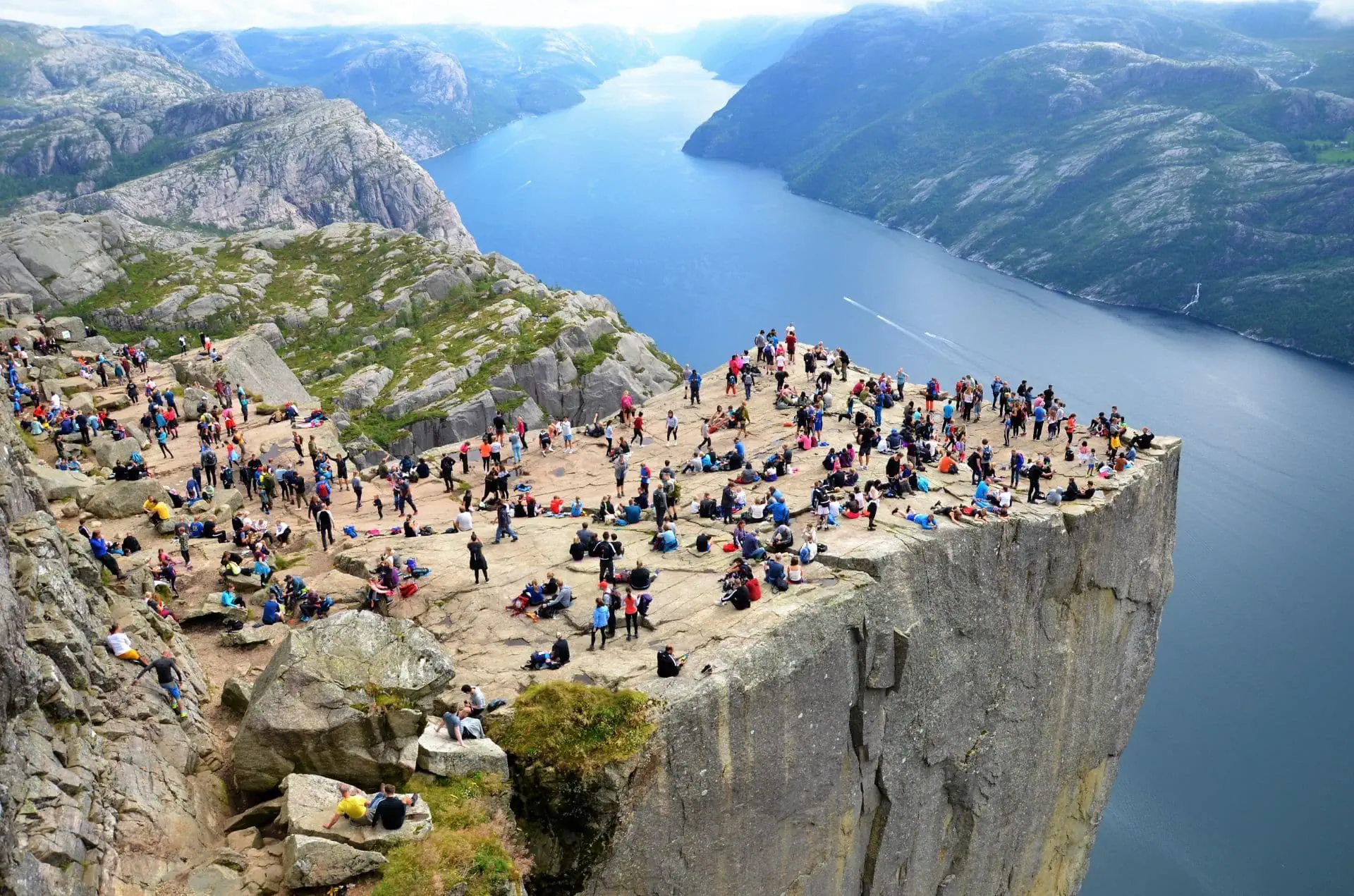
Malgré sa popularité croissante, Preikestolen demeure un site sûr, et des géologues mesurent régulièrement la stabilité de cette formation rocheuse depuis les années 1990. Bien que la fissure traversant le plateau sommital de Preikestolen puisse inquiéter certains visiteurs, elle ne traverse pas la formation de part en part et ne s'élargit pas. Le nom Preikestolen, qui signifie " chaise du prédicateur " ou " rocher de la chaire ", évoque la ressemblance de cette imposante formation rocheuse avec l'estrade sur laquelle prêchaient les prédicateurs chrétiens dans les chaires traditionnelles, soulignant ainsi la beauté naturelle et la signification spirituelle de ce site emblématique.
Visitez Preikestolen
Nous vous proposons de passer par Revsvatnet, le meilleur du Preikestolen BaseCamp et un point de vue confortable pour prendre des photos jusqu'à la majesté des Preikestolen. Les beaux paysages du Preikestolstien offrent des terres et une nature variées, et des voyages avec des paysages et des excursions au-dessus du Lysefjorden.